2025年6月29日 星期日

三三昧The Three Samādhis

 三三昧


大家好!


雜阿含經被公認為最接近佛陀的說法,

我要說《雜阿含經80經》「三三昧」


先引用以下這些資料。

AI資料

一、什麼是《雜阿含經》?

是漢譯四部阿含之一(長、雜、中、增阿含),為早期佛教經典的代表。


全經共1362經(通行本版本,部分版本略有出入),內容多為佛陀與弟子間的直接對話。


現存漢譯版本由東晉時代的僧伽提婆與竺佛念合譯,譯於約西元4世紀。


二、學術與實證依據:為什麼《雜阿含經》被認為最接近原始佛法?


1. 與南傳巴利文《相應部》高度對應

南傳上座部佛教的《相應部》(Saṃyutta Nikāya)和《雜阿含經》是內容、結構、主題幾乎對照的兩套經典。


例如,關於五蘊、十二因緣、四聖諦、無常觀、無我觀等核心教義,兩者完全一致。

此種對應性被認為是「跨語系、跨傳統的共通佛法核心」。


2. 教義內容質樸、無神化

沒有後期大乘佛經那樣的「佛土莊嚴、無量諸佛」的敘述。

佛陀形象較質樸,不強調神通與莊嚴報身,而是重點在「觀行」、「苦集滅道」、「戒定慧三學」。

彰顯人間佛教、解脫為本的教學風格。


3. 時代久遠,離佛世最近

阿含經的口傳編纂,據信在佛陀入滅後百年內完成,遠早於漢地大乘經典如《華嚴》、《法華》、《維摩詰》等。


三、佛學界權威學者的看法


印順導師:強調《雜阿含經》是「初期佛法的核心結集」,稱之為「佛法的根本法輪」。


鳥居久靖、宇井伯壽、赤松明彦等日、歐學者亦指出:四阿含經為研究佛陀原教最可信的史料。


中村元:認為《阿含經》與《尼柯耶》可用以重建歷史佛陀的言教。


The Three Samādhis


Greetings, friends of NanZen!


Among all Buddhist texts, the Saṃyuktāgama is widely regarded as one of the most faithful reflections of the Buddha’s original teachings. Today, I’d like to explore Sūtra 80, which introduces the “Three Samādhis.”


Let me first provide some reference information.


AI Data


I. What is the Saṃyuktāgama Sūtra?


It is one of the four major Āgama collections in the Chinese Buddhist canon (alongside the Dīrgha, Madhyama, and Ekottarika Āgamas), representing the core scriptures of early Buddhism.


This collection contains 1,362 sūtras (in the standard edition; some versions differ slightly), and it largely comprises direct dialogues between the Buddha and his disciples.


The extant Chinese translation was completed in the 4th century CE by the Indian monk Saṅghadeva and the Chinese monk Zhu Fonian during the Eastern Jin dynasty.


II. Why is it considered closest to the original Dharma, based on academic and practical evidence?


High Correspondence with the Pāli Saṃyutta Nikāya

The Saṃyuktāgama closely parallels the Saṃyutta Nikāya of the Southern Theravāda tradition in structure, content, and core themes.

Teachings on the five aggregates, twelve links of dependent origination, Four Noble Truths, impermanence, and non-self are virtually identical.

This intertextual consistency is seen as a reflection of the shared, cross-linguistic core of Buddhism.


Simple and Unsensational Doctrinal Style

Unlike later Mahāyāna scriptures that describe pure lands and infinite Buddhas, the Saṃyuktāgama presents a humble image of the Buddha, with minimal emphasis on supernatural powers or glorified forms.

Its focus is on practice, insight, the Four Noble Truths, and the Threefold Training of morality, concentration, and wisdom — highlighting a human-centered, liberation-oriented approach.


Earliest Compilation, Closest to the Buddha’s Time

These sūtras were orally compiled within about a century after the Buddha’s passing, much earlier than Mahāyāna texts like the AvataṃsakaLotus, or Vimalakīrti Sūtras.


III. Views of Buddhist Scholars


Venerable Yinshun emphasized that theSaṃyuktāgama is the “core compilation of early Buddhism,” calling it “the fundamental turning of the Dharma wheel.”


Japanese and Western scholars such as Hisayoshi Torii, Hakusei Ui, and Akamatsu Akihiko also regard the four Āgamas as the most historically reliable sources for studying the original teachings of the Buddha.


Hajime Nakamura argued that the Āgamas and Nikāyas together form the most credible basis for reconstructing the Buddha’s historical teachings.


2025年6月28日 星期六

耳根圓通後記Postscript on the “Perfect Penetration via Hearing”

耳根圓通後記


大家好!


前幾天寫的《愣嚴經》耳根圓通,及佛陀割肉餵鷹的典故,

個人寫說:我會丟到垃圾桶,引起非議!

那是因為只要冠上是「佛說」都會被頂禮膜拜。

這也牽涉各人的立場不同,


我個人站在證悟的角度去追求佛法,

年輕就修行的我,如只學會唸經或佛典知識都不是我可以接受的,不可能沒有收穫。


想要對佛法有所成就,必定要挑出真正的佛法來,至少是最接近的。


古代文字是很珍貴的,大部分的人是文盲。

只要是文字就會被珍藏,更何況是佛說,

所以這裡面不用判真偽的態度是很清楚的,


但如果你是試圖有所成就的修行者卻常常拿錯誤的地圖,

我不知道各位能忍受多少?


真偽的判別都定義在研究上,

但我常常吃那種虧,

一再的研究有什麼意義呢?


根據我個人修行的所見做出定義,推測,判別(人體器官ㄧ定是同時運作的,不可能單獨修持耳朵器官),


至少有清楚的目標,

當然你也可以否認我!


再者,如果你真的是佛教徒,

真的可以忍受佛陀在那裡割肉布施嗎?

我個人是連聽一句都無法忍受!


不丟到垃圾桶去又能如何?

句句肺腑之言。


半寄


(至少長年的寫佛法釐清,

不用老是再重複解釋我不想聽到的佛法,

為什麼是錯的!


這是讓我最愉快的收穫,至少我的耳根清淨 🙏哈哈😆


Postscript on the Perfect Penetration via Hearing


Greetings, friends of NanZen!


A few days ago, I wrote about the method of “Perfect Penetration via Hearing” in the Śūraṅgama Sūtra, along with the tale of the Buddha offering his flesh to an eagle.

When I said I would discard these stories into the trash, it sparked criticism.

That’s because anything attributed to “the Buddha’s words” is often revered uncritically.


This response, of course, reflects differing perspectives.


As someone who seeks the Dharma through the lens of direct realization,

I began my spiritual path young, and mere scripture recitation or doctrinal knowledge was never something I could accept without tangible inner transformation.


To truly achieve progress in Buddhism, one must identify and rely on teachings that are genuinely authentic—or at least as close to the original intent as possible.


In ancient times, writing was rare, and most people were illiterate.

Any written text, especially one attributed to the Buddha, was preserved without question.


This explains why authenticity is seldom challenged. But for practitioners striving for awakening, using a flawed map repeatedly is unacceptable. How much misdirection are you willing to tolerate?


Scholars define authenticity through academic methods,but I’ve personally suffered from relying too heavily on such methods. What good is endless research without resolution?


Based on my own practice, I’ve come to my own judgments and insights.

(Human organs work together—you can’t train just your ears alone.)


At least, I know what I’m aiming for.

Of course, you’re free to disagree with me.


Furthermore, if you are a genuine follower of the Buddha,

can you truly accept the image of the Buddha slicing his flesh as an offering?


For me, even hearing such a story is unbearable.

If not the trash bin, then where else should it go?

Every word here is heartfelt.


Master Banji


(After so many years of writing and clarifying the Dharma,

I no longer need to repeatedly explain why I reject teachings I find mistaken.

This, to me, is a great joy—my ear faculty has finally been purified. 🙏😆)


2025年6月27日 星期五

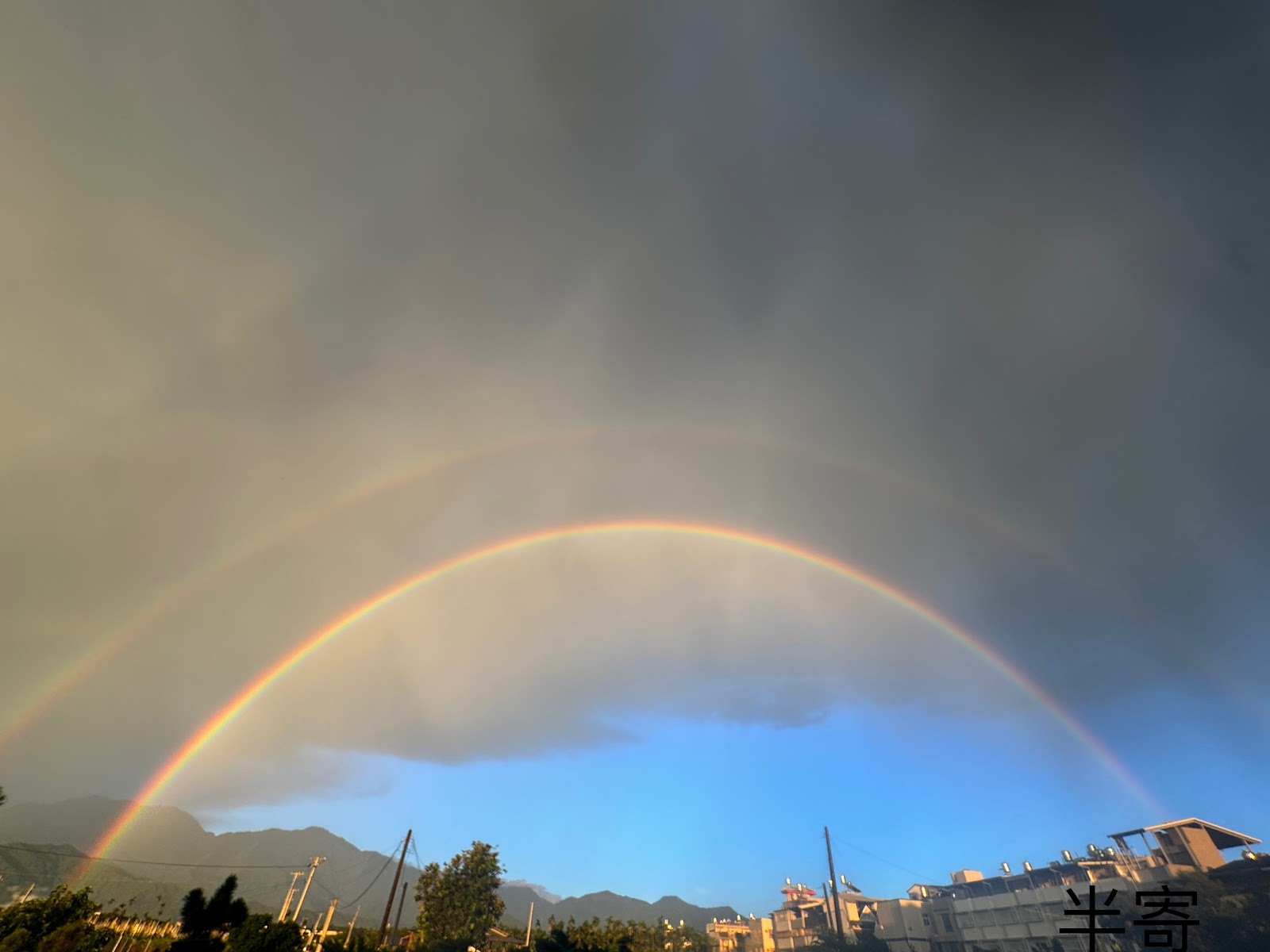
長虹飲水挾秋雲

 雨後誇張的彩虹


AI資料

唐.李賀「神仙曲」

長虹飲水挾秋雲。

半寄


2025年6月24日 星期二

問題回覆 : 耳根圓通 Response to the Question of“Perfect Penetration via Hearing”

問題回覆 : 耳根圓通


關於觀音菩薩的耳根圓通,我們直接看下面(AI資料)第四點,


華人似乎很喜歡「動、靜」是不用分別的,


我想請問:人體的感官可能做到這個點嗎?

人體如何在吵雜的聲音裡面感受到安靜,或是肉體受到攻擊的時候,

修行者必須忍辱到沒有感覺?


我後來說:雜亂無章的佛法,

乾脆請佛陀割肉餵鷹,活著的肉體都要割完了,才叫布施?!


把佛法往不可能或殘酷的方向說去,

只要冠上「無上道的意義」一樣切後世傳誦的佛法暢行無阻。


四聖果是人體可以完成的,

佛法被陳義到反而去推崇身體以外不能碰觸的宇宙世界,

那你要這個方法幹什麼?

你碰不到啊?


就算是四聖果的阿羅漢,聲音還是聲音,肉體一樣會死亡,

而都沒有分別了! 沒有分別是什麼意義呢?感官知覺全部打死嗎?


天哪!我已經很有耐心在回答問題,這種問題我以前都丟到垃圾桶。


「耳根」就是耳朵聽到什麼話,具有判斷的能力,不去隨著話語搖擺,


這是「耳根」,一樣沒有脫離肉體器官,而不是有什麼弦外之音!


根據考證《楞嚴經》是偽經,相關學術資料請讀者自己去查了。

半寄


以下AI資料

「耳根圓通」是什麼?

「耳根」:是指「耳識」、「聽覺的根本」,即從聽聞聲音入門修行。

「初於聞中,入流亡所,所入既寂,動靜二相,了然不生……」

這段話意思是:

1.「初於聞中」:從「聽聲音」入手。

2.「入流亡所」:不是跟著聲音外流去聽,而是反聞自性,往內聽「聲音的來源」。

3.「所入既寂」:內觀的心逐漸寂靜、無聲。

4.「動靜二相,了然不生」:對聲音(動)與靜默(靜)不再分別,心如虛空,不執著於聲音的有無。

這就是耳根圓通的核心修法──反聞聞自性,性成無上道。


Response to the Question ofPerfect Penetration via Hearing”


On Avalokiteśvara’s “complete liberation through hearing,” let’s consider point 4 from the AI reference below.


It seems many Chinese Buddhists like to say that "movement and stillness are the same."

But I want to ask: Can the human body really do that?

How can the body feel calm amidst noise?

Or if under physical attack, should a practitioner endure to the extent of being numb?


I then said: If we keep misrepresenting Dharma like this, we might as well interpret “generosity” as the Buddha slicing off all his flesh for a bird—until none is left!


When Dharma is glorified with extreme or impossible ideals, everything becomes acceptable once labeled as “supreme.”


The Four Stages of Enlightenment are something humans can actually reach. However, what’s the purpose when the teachings glorify some realm beyond physical experience? Practitioners can’t even access it.


Even arhats still hear, still die.

If there’s no distinction, does that mean sensory function is nullified?


Honestly, I’ve responded patiently. I used to dismiss these questions entirely.


"Faculty of hearing" means the ear hears words and has the power to judge them without being swayed.

It is still a physical sense and not something beyond the body or filled with hidden meanings.


Also, according to research, the Śūraṅgama Sūtra is not considered authentic. Readers can look it up themselves.


Master Banji


AI Data

The Practice of “Perfect Penetration via Hearing”

"Faculty of hearing" means our ability to hear—


The term “faculty of hearing” refers to auditory awareness—using sound as a starting point for spiritual practice.


In the Śūraṅgama Sūtra, the passage states:

"Begin with hearing, reverse the flow, enter silence; when silence is complete, movement and stillness no longer arise."


Explanation:

Begin with hearing: Use auditory perception as the point of entry.


Reverse the flow: Instead of following sounds outward, direct awareness inward to observe the origin of hearing.


Enter silence: As attention deepens, the mind becomes calm and silent.


Movement and stillness no longer arise: There is no longer a distinction between sound and silence; the mind is spacious, unattached to presence or absence of sound.


This is the core of the “ear-consciousness method of liberation”: to reverse hearing and realize the self-nature, thereby attaining the supreme path.


讀者回饋


就跟「善根」有異曲同工之妙?


半寄回應:

是的耳朵聽到還要大腦判斷,單獨的器官是不能獨立運作的。


還有大德想知道我對「心與心所」的看法,

前面的文章有提過,它是部派佛教論師對心理的分析跟做出一種修行遵循的次序,


人要對自己這麼了解自己,一定要有入定經驗,


但入定會浸在喜樂裡,修行者也不見得想再了解這些,


之前說過了在入定跟出定之間跑來跑去,其實也很累,

所以呢?我不會講。哈

廢話!


半寄


Reader’s feedback


Q:Is it somewhat analogous to the idea ofwholesome roots?


Banji replied:

Yes.

The ears may hear, but the brain still has to make a judgment—no single organ can function independently.


Some laymen also want to know how I see “mind and mental factors.”

As I mentioned in earlier posts, this is an analysis by Abhidharma scholars in sectarian Buddhism, laying out a psychological framework and a sequence to follow in practice.


To truly understand yourself this deeply, meditative experience (samādhi) is essential.


However, entering samādhi is often so blissful that practitioners may no longer feel the need to analyze such things.

As I’ve said before, moving back and forth between entering and exiting samādhi can be exhausting.

So then? I have no more to say. Laughs.

Pointless talk!


Master Banji

2025年6月22日 星期日

七處徵心8 -9Seven Places the Mind Is Sought 8 -9

七處徵心8


我個人對禪宗的研究是

華人禪師大部分的開悟來自「言語道斷,心行處滅」這個境界,


到達這個程度的禪師或者行菩薩道,或者涅槃,參考下面截圖長沙景岑禪師。


華人禪師採用對佛法的了解方式,

是用逼迫自己的方式-苦參,

苦參容易把自己逼上絕境,

「絕後再蘇」的結果,

是「言語道斷,心行處滅」的體悟。


但這畢竟是苦苦逼出來的結果,

跟去懂空法、無常、無我之間的邏輯是截然不同的,


這也導致每個開悟的禪師所說出來的佛法是南轅北轍的。


南轅北轍的開示指點,也讓追隨者嘗試在禪師的話語裡面捕風捉影,


而實質上最具體的內容「言語道斷,心行處滅」,

是介於「四禪天」與「非非想」的體會。


這些大腦已達盡頭的具體深入,

可以用入定或專注思考無常、無我的經驗,

便能看懂藏在字面下的意義。

半寄


Seven Places the Mind Is Sought 8


In my research on Chan (Zen) Buddhism, I’ve found that many Chinese Chan masters become enlightened through a deep state where words no longer work and the mind becomes completely still.


When a master reaches this point, they might continue practicing as a Bodhisattva or enter Nirvana. One example is Master Changsha Jingcen, as shown in the screenshot below.


Chinese Chan masters usually try to understand the Dharma by pushing themselves very hard—this is called “bitter inquiry.” This harsh approach pushes them into a breaking point, where a “rebirth after extinction” leads to the realization of speech ends, and mental activity stops.


But this type of enlightenment is the result of intense struggle. It’s very different from understanding śūnyatā, impermanence, and non-self through reasoning.


That’s why different masters often explain the enlightenment in very different ways, often contradicting one another..


These contrasting teachings have led followers to grasp some elusive meaning from the master’s words, hoping to uncover hidden truths.


In fact, the experience of “speech cut off, mind still” is somewhere between the meditative states of the Fourth Dhyāna and “neither perception nor non-perception.”


When the brain has reached its limits and experienced this deep state, someone who has practiced deep meditation or reflected on impermanence and non-self can understand the meaning behind such words.


Master Banji


七處徵心9


讀者從《愣嚴經》七處徵心1看過來,應該可以理解到一個事實,關於「心」的看法於佛法,它不是抽象概念。


以修行而言,人體的感官知覺從初禪到四禪亦是由粗到細膩的過程,

感官知覺就算到達「非想非非想」的微弱,修行者也一路清楚於每個節奏,「心(意)解脫,身作證」。


這種由修行者累積的功力,稱做

「如來藏心」、「真如」「轉識成智」或是「言語道斷,心行處滅」,


也因修行者自我的認知不一,而說出不同的形容詞。


至於我個人的認知是;

佛陀制定的四聖果,

配合四禪八定,便已完整。


(當然,想進入無常、無我,龍樹菩薩的《中觀論、空論》是首選)


半寄


Seven Places the Mind Is Sought 9


Readers who have followed the ŚūraṅgamaSūtra’s " Seven Places the Mind Is Sought " series from the beginning should now see now that, in Buddhist teachings, the "mind" is not merely an abstract concept.


In meditative cultivation, the body’s sensory awareness refines progressively from the coarseto the subtle as one advances through the four Dhyānas. Even when reaching the extremely subtle state of "neither perception nor non-perception," the practitioner remains acutely aware of each phase. This is the realization of liberation of the mind (or intention), confirmed through the body (citta-vimutti kāyena phusitvā).


This refinement, born of sustained spiritual practice, is variously named:  "Tathāgatagarbhamind," "suchness" (tathatā), "transforming consciousness into wisdom," or “speech ends, and mental activity stops”


Different people use different words depending on how they understand themselves through practice.


From my perspective, the Four Stages of Enlightenment set by the Buddha, combined with the Four Dhyānas and Eight Concentrations, already form a complete path.


(Of course, for those wishing to explore impermanence and non-self more deeply, Nāgārjuna’s Mūlamadhyamakakārikā and his teachings on śūnyatā are the best sources.)


Master Banji