2025年7月4日 星期五

無相三昧4 Formless Samādhi 4

無相三昧4


無相三昧:指觀六塵(色、聲、香、味、觸、法)的無常。

這些表象看起來合乎佛法的字義,再來小論述。


入定-是人體對於脫胎換骨的修持,到達一個頂尖,

包括由佛法的理解產生的-入法(慧解脫)。

經過入法、入定的洗禮,人體的感官知覺會伴隨著產生變化,


這是一種人體本身歷經修持產生的大洗禮,

由於肉體的感官發生變化,對於有生命開始就有的知覺也會有不同的感受,


這種感受源自於修行的進步產生的變化,是自然而然的。


而六塵教授的色、聲、香、味、觸、法,在此時也可部分理解,


我指出是「部分理解」,因為修行者的程度不一,所以他理解佛法的程度也不一,

就像我們看到佛陀的弟子們所傳授的三昧說法也千百種,原因是;各人程度不同。

沒有上述「入法與入定」的洗禮,直接觀想六塵的無常,

試想,人體可能在生活中對色、聲、香、味時刻去鍛鍊它的無常嗎?


除非是修行者個人專精的修持,

再不然只能做佛法詞彙的理解。


我了解的很多指導都指向你可能連吃一碗飯都要計較自己的貪念頭,這實在太累與背離人性,


這種拿計算機的修法,會導致很用功的修行者,最後被扭曲並且一事無成,


不知道錯誤在哪裡也就算了,更可能還得懺悔自己的資質駑鈍,那才叫冤。


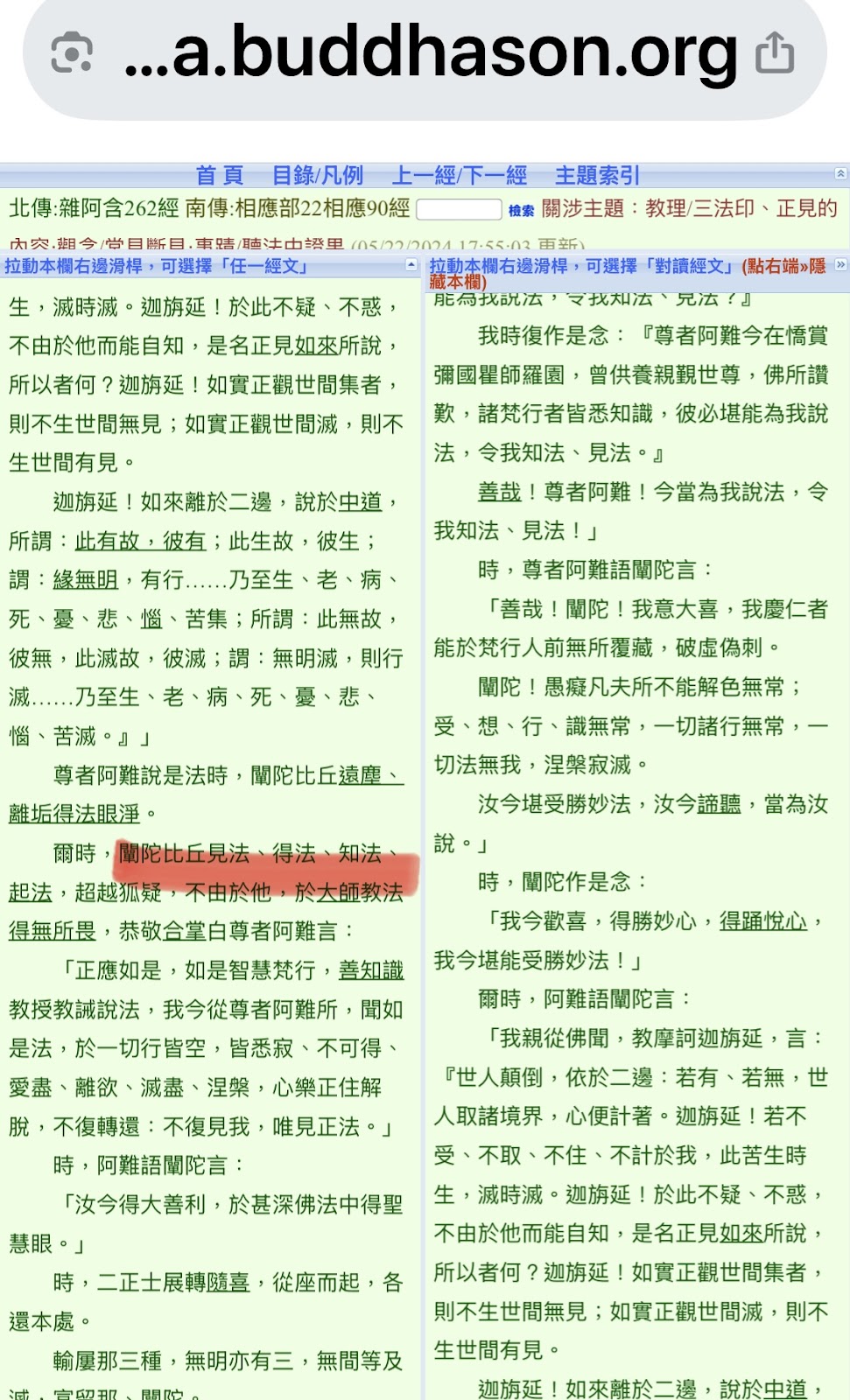
下面截圖1. 雜阿含262的經文,指出

「知法、得法、見法、起法,超越狐疑,不由於他」

(不須再從別人口中知道佛法,已經確定自己明白、清楚佛說-入法)


我個人一直很喜歡這樣的修法,

可以確切去掌握佛說,

在很繁瑣的塵事上去摸索,不如認知它的前因後果(集的提出)。


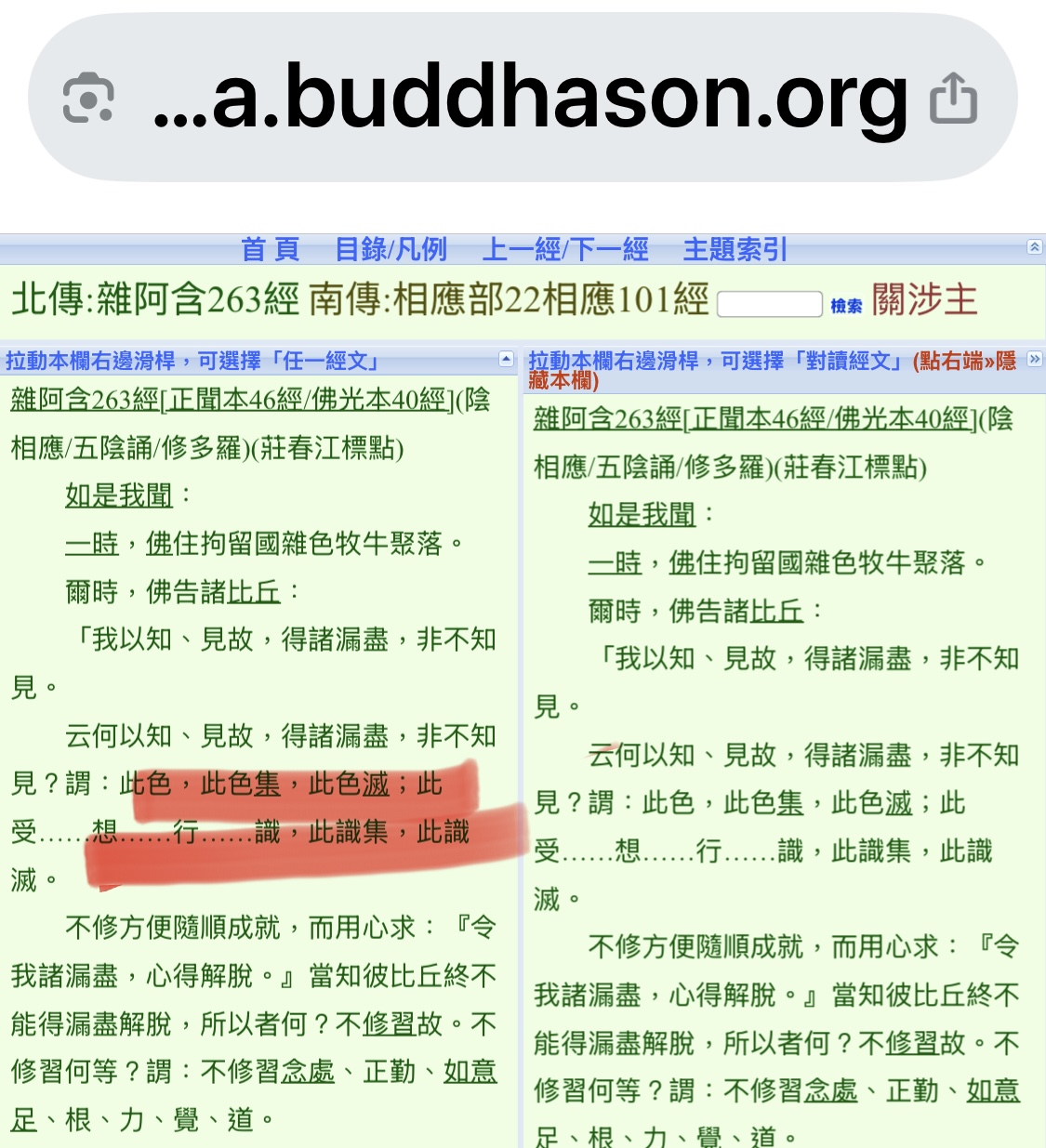
截圖2. 雜阿含263經文,

指出「此色集,色滅、識集、識滅」,依然在「因緣法」中闡述,沒提到無常。

半寄


以下AI資料

「六塵」是佛教中後期發展出來的術語,指色、聲、香、味、觸、法,

也就是六種感官對象,與「六根」(眼、耳、鼻、舌、身、意)相對應。


這一概念在阿含經(如《雜阿含經》)和後來的佛教教義中逐漸被系統化,用來描述感官與外境的互動如何引發執著與痛苦。


隨著佛教教義的發展,特別是在阿含經和部派佛教時期,六根、六塵、六識的概念逐漸被詳細闡述,用以分析認知過程和輪迴的形成。例如,《雜阿含經》中提到六根與六塵的互動,作為緣起法的一部分。


Formless Samādhi 4


Formless Samādhi means seeing that the six sense objects—form, sound, smell, taste, touch, and mental objects—are all impermanent.

This idea fits with Buddhist teachings on the surface, and now I’ll give a short explanation.


Entering samādhi (deep meditation) means that the human body goes through a kind of transformation.

This includes understanding the Dharma deeply and entering it with wisdom—this is called entering the Dharma (wisdom-liberation).


After going through the process of entering both the Dharma and deep meditation, the body’s sense perception begins to change.

This is a powerful, natural transformation that happens after real practice.

As the body’s senses change, the way we feel and respond to the world also changes.

This new experience comes from spiritual progress, and it happens naturally.


At this stage, the six sense objects—form, sound, smell, taste, touch, and mental objects—can start to be understood more deeply.

But I say "partially understood," because every practitioner is at a different level, and their understanding of the Dharma is also different.

That’s why the Buddha’s disciples explained different kinds of samādhi—there are many, depending on each person’s ability.


If someone hasn’t gone through the deep process of entering the Dharma and entering samādhi,

it’s hard to just “meditate on the impermanence” of the six sense objects.


Can a person really train their mind to see impermanence in form, sound, smell, and taste while doing daily tasks?

Only if they’re a serious practitioner. Otherwise, it’s just a matter of understanding words in the Buddhist texts.


Some teachings even suggest that you should watch your mind while eating, and keep track of how greedy you are.

But to me, that’s exhausting and goes against human nature.

This kind of "calculator-style" practice makes people overly tense. Even if they work hard, they may achieve nothing in the end,

not even knowing where they went wrong. And worse, they might blame themselves for being “dull,” which is a real pity.


Below is Screenshot 1: a verse from Saṃyukta Āgama 262 says:

Knowing the Dharma, attaining the Dharma, seeing the Dharma, giving rise to the Dharma—beyond doubt, not relying on others.”

(This means you no longer need others to explain it; you know for yourself what the Buddha taught. That’s entering the Dharma.)


I personally love this kind of practice.

It allows you to clearly understand what the Buddha meant.

Rather than struggling in worldly matters, it’s better to understand the cause and effect behind them (the teaching of origin).


Screenshot 2: from Saṃyukta Āgama 263,

It says “the arising and cessation of form and consciousness,” and explains this through dependent origination, but doesn’t talk about impermanence directly.

Master Banji


AI Data:

The “six sense objects” (ṣaḍviṣaya) are a term developed in later Buddhism. They refer to form, sound, smell, taste, touch, and mental objects—what our six senses perceive. These match the “six sense bases”: eye, ear, nose, tongue, body, and mind.


This concept was gradually developed and systematized in early texts like the Saṃyukta Āgama, and later Buddhist teachings.

It explains how the interaction between senses and the outside world causes attachment and suffering.

In early Buddhism and Abhidharma systems, the ideas of the six sense bases, six sense objects, and six kinds of consciousness were deeply explored to explain perception and how rebirth works.


 以下AI資料


「六塵」是佛教中後期發展出來的術語,
指色、聲、香、味、觸、
也就是六種感官對象,與「六根」
(眼、耳、鼻、舌、身、意)相對應。

這一概念在阿含經(如《雜阿含經》)
和後來的佛教教義中逐漸被系統化,
用來描述感官與外境的互動如何引發執著與痛苦。

隨著佛教教義的發展,
特別是在阿含經和部派佛教時期,
六根、六塵、六識的概念逐漸被詳細闡述,
用以分析認知過程和輪迴的形成。例如,
《雜阿含經》中提到六根與六塵的互動,
作為緣起法的一部分。


2025年6月30日 星期一

無相三昧2-3 Formless Samādhi 2-3


無相三昧2


以我個人在這方面的鑽研,「空三昧」如能有所體悟便可對佛法有更高的掌握度,

修行者如何在現實中不隨色轉、物轉有「空三昧」的力量應該就夠了。


而這裡面必須考慮一種現實問題,

既然接受佛法「因緣法」的內容,


那就包括有高度修行的修行者,

一樣會受群眾的大力量因緣扭轉,

所謂的社會環境,


社會環境的影響一旦被承認對於「無相三昧」更是一種矛盾,


無相只能在「斷」字中存在是-涅槃的問題,


其餘找不到更好的存在點,跟適當的說法。


我個人理解的「空三昧」,還可以擁有對社會環境的透視度,


因為透過邏輯來理解空跟「觀色相斷」是兩種不同的詮釋

個人只接受「空三昧」,


對於「無相三昧」、「無作(無願)三昧」合理懷疑為後人的作品。


從文字就可以理解到「無相與跟無作」,

完全是針對在人群中生活發展出來的理念,


「無作(無願)三昧」,更是清楚表達在人群中的無求,


修行當然可以提高修行者內心高度,

但是完全到無相、無願,太強人所難了。


個人比較傾向可以在現實跟修行之間,達到一種平衡的佛法觀念,


這也是實現人間佛教必要有的一種理念貫穿。


截圖的《567經》便是比丘對比丘的說法,

佛陀弟子間互相的討論佛法,也已經添加很多在《阿含經》裡面,


這也無所謂,只要把握四聖果的內容也可以得到很好的解答。


半寄


Formless Samādhi 2


From my own study, I feel that if a person can truly understand even just “Śūnyatā Samādhi,” it gives them a much stronger grasp of the Dharma.

For most practitioners, having the strength to not be affected by appearances or outside things through Śūnyatā Samādhi is already enough.


But there's a practical issue to think about:

If we accept the Buddha’s teaching of dependent origination, then even advanced practitioners can still be influenced by the powerful causes and conditions of the world around them—what we call the social environment.


Once we recognize that society affects us, it becomes hard to accept the idea of “Signless Samādhi” as it’s described.


Why? Because true “signlessness” must involve cutting off all forms—this connects directly to the idea of Nirvāṇa.

Outside of that, I can’t find a meaningful or realistic place where it works.


In my understanding, Śūnyatā Samādhi still allows a person to see through and understand society.

That’s because using logic to understand “śūnyatā” is very different from By contemplating forms and appearances, one can cut off attachment to sensory feelings.”

So I only accept the path of Śūnyatā Samādhi.


I reasonably suspect that “Signless” and “Wishless (Non-willing)” Samādhis may have been later additions.

The terminology itself reveals that both concepts were likely developed in the context of communal living.

For example, Wishless Samādhi clearly refers to having no expectations or desires while living among others.


Of course, spiritual training can elevate the inner life.

But to expect someone to completely let go of all signs and all wishes seems overly demanding—perhaps even unrealistic.

I personally favor a balanced Buddhist view—one that integrates real life with Buddhist practice.

Such a view is essential to the implementation of Humanistic Buddhism.


The Sūtra 567 I referenced is a dialogue between monks—Buddha’s disciples discussing the Dharma with each other.

This kind of conversation already appears often in the Āgamas.


Ultimately,, that’s okay. As long as we understand the teachings related to the Four Stages of Liberation, we can still find meaningful answers.


Master Banji


無相三昧3


個人寫的《佛法最終的實現》

一書提過在修證四聖果的內容,

所有的經典都指向於斷字詞彙,


只有龍樹菩薩的《中觀論》提出「破」的詞彙。


在「無相三昧」裡面寫到

「觀色相斷」


「斷」的意義是原始佛教用的最多的一個詞彙,


斷字中很明顯又想在人群生活的「相」裡面得到平衡,


但文字之間的思考就已經是矛盾不已,


想要在人間存活又想要用斷的方式,個人一直覺得這是佛法裡面更必須去思考到的一個問題。


除了「破」的詞彙以外,是不是「超越」的詞彙也是可以被考慮的。


當然,如果修行者的首選是涅槃的話,

那就是「斷三結。」

而不是「破三結」。


三昧是入深定的境界,

中文也可解釋為「得個中精華-三昧」。

入深定當然可以無相、無願,

但是出定呢?


半寄


Formless Samādhi 3


In my book Ultimate Realization in BuddhismI mentioned that when it comes to realizing the Four Stages of Enlightenment, almost all Buddhist texts use the word cut off to describe what has to be let go.


Only Nāgārjuna, in his Middle Way, uses the word “overcome” instead.


In the teaching on “Signless Samādhi,” we see,By contemplating forms and appearances, one can cut off attachment to sensory feelings.

The word “cut off” was used most often in early Buddhism.


But there seems to be a contradiction here:

On one hand, the practice is about cutting off attachments to appearances,

but on the other hand, there is still an effort to find balance while living in society.

Trying to do both at once—live in the world and cut everything off—has always struck me as a real challenge in Buddhist practice.


So I wonder: beyond “cutting off” and “overcoming,” might the concept of “transcending” offer a more integrative approach?


Of course, if the goal is Nirvāṇa,

then the correct wording should be “cut off the three fetters,”

not “overcome the three fetters.”


Samādhi is a deeply concentrated state of meditation. In Chinese, it can also be understood as “grasping the essential core.” Entering deep samādhi may involve states of non-form and non-desire, buthe real question is—what remains or arises after one exits this state?


Master Banji


2025年6月29日 星期日

6月讀書會錄音檔

分享20250629-南禪基金會潮州讀書會錄音檔

https://reurl.cc/1KrnRV

無相三昧1 Formless Samādhi 1

無相三昧1


問題


「雜阿含經80三三昧修行次第:空(觀五蘊無常)→ 無相(離六境)→ 無作(斷三毒、破我見)


請問師父:

 1. 南禪精舍修行依據初果至四果一貫觀法 無常 苦空 無我 (259經舍利弗答摩訶拘絺羅之無間等法與三三昧的修行次第能否互相印證


2. 三三昧與四果觀係能否理解成 空三昧  破欲愛 (身見戒取疑貪嗔); 無相三昧  破色愛無作(無所有)三昧  破無色愛、掉舉、慢、無明.


半寄解答:


說到「無相三昧」我在修行幾年以後一


直在考慮這個問題,


如何在修行跟生活裡面取得平衡,

這邊就簡單提一個重點來講 :


取自《雜阿含經80經》部分內容。


「佛告比丘:「空三昧的修法若比丘於空閑處樹下坐,善觀色無常、磨滅、離欲之法。如是觀察受、想、行、識,無常、磨滅、離欲之法。觀察彼陰無常、磨滅、不堅固、變易法,心樂、清淨、解脫,是名為空。如是觀者,亦不能離慢、知見清淨。」


半寄:上面經文,個人認為「空三昧」的修法透過龍樹菩薩的《中觀論》可以做邏輯性的了解,

甚至讓修行者進入「空」的體會。


經文:「無相三昧的修法復有正思惟三昧,→「觀色相斷,」聲、香、味、觸、法相斷,是名無相。

如是觀者,猶未離慢、知見清淨」


半寄:

而無相三昧觀,

「觀色相斷」對活在現實世界上的修行者而言,

幾乎是不可能的事情。


我查了資料大部分的解釋都指向

無常、空、夢幻如此去理解無相,

或是心不隨物轉,


問題是經文寫著「觀色相斷」用了「斷」字。


相都斷了,跟無常、空、夢幻或是轉物根本就不相干,


後世漢系佛學者把很多佛法都完全隨個人心意扭轉到合理的說法,


實際上拿原文比較根本說不下去。


半寄


Formless Samādhi 1


Greetings, friends of NanZen!


Question:

In Saṃyuktāgama Sūtra 80, the Buddha teaches that practice should go step by step through:


Śūnyatā (by seeing the five aggregates as impermanent)


Signlessness (by letting go of the six sense objects)


Wishlessness (by cutting off the three poisons and destroying the ego-view)


At NanZeVihara, the path from first to fourth stage of awakening follows a method of contemplating impermanence, suffering, śūnyatā, and non-self (based on Sūtra 259 where Śāriputra answers Mahā Koṭṭhita about the uninterrupted path). Do these methods match the Three Samādhis?


Can we understand the Three Samādhis like this?


Śūnyatā Samādhi = removes craving for sense pleasures (like identity view, attachment to rules, doubt, greed, anger)


Signless Samādhi = removes attachment to the form realm


Wishless Samādhi = removes attachment to formless realms, restlessness, pride, and ignorance?


Banji Replies:

When it comes to “Signless Samādhi,” I’ve thought a lot about it during my years of practice. How can we balance daily life with spiritual training?


Here’s a core excerpt from Sūtra 80:


The Buddha said: “To practice the Śūnyatā Samādhi, a monk sits quietly under a tree and contemplates form as impermanent, subject to decay, and devoid of desirabilityHe likewise observes feelings, perceptions, mental formations, and consciousness in the same way.

By seeing these aggregates as unstable, disappearing, and constantly changing, the mind becomes joyful, pure, and liberated — that is called ‘Śūnyatā.’

But even with this practice, pride and impure views still remain.”


Banji comments:

I think this kind of practice can be understood more clearly using Nāgārjuna’s Middle Way teachings. It can help people understand what “śūnyatā” really means and even feel it during their practice.


Another part says:

“In Signless Samādhi, we think deeply and correctly: ‘Cut off attachment to forms, sounds, smells, tastes, touch, and mental objects’ — that is Signless.

But even this won’t fully remove pride or purify one’s view.”


Banji comments:

But trying to sever attachment to form” in everyday life is nearly impossible.


Most modern explanations interpret “signless” as something like śūnyatā or illusion, or say it means “not being influenced by things.”


But the sūtra uses the word “sever” — not just seeing through or letting go.

If the signs are completely cut, then this has nothing to do with just seeing impermanence or śūnyatā.


Later Chinese Buddhists often changed the meaning of teachings to fit their ideas, but if you compare their explanations to the actual text, it really doesn’t match.


Master Banji